

Program Transcript
Episode 38: 7 Feasts: The Holiest Day of the Year
Heather M R Olsen
Shalom friends.
So grateful you have downloaded today in your interest to continue the journey of God’s appointed times, or moedim.
We completed the first of the three fall feasts—those yet to be fulfilled. In our last podcast, we covered Yom Teruah, which is modern-day Rosh Hashanah, the Jewish new year, and the sounding of the trumpet. Topics such as the Book of Life, Repentance, End Times prophecy, and Jesus’ return are highlighted.
The focus on Jesus’ Second coming and End Times is more about knowing the prophecies and being ready over subscribing to a specific doctrinal End times philosophy. Remember in the 1st century, the most biblically educated and elite knew every single prophecy. They also believed they knew how the Messiah was going to arrive and what he was going to do for them. This educated bunch missed the mark.
Remember when the Magi arrived in Jerusalem following the unprecedented star? They asked around town, and the paranoid King Herod the Great summoned them to find out more regarding this “newborn king” who would supposedly replace him. In fact, all of Jerusalem was disturbed as well (Matthew 2). Herod called in the most biblically elite, the chief priests and teachers of the law and asked where the Messiah was to be born. Not only did they tell Herod where—Bethlehem in Judea—they quoted the very scripture from Micah 5 that told them exactly where the Messiah was to be born.
Here’s Matthew 2:2-6
4 When he [Herod] had called together all the people’s chief priests and teachers of the law, he asked them where the Messiah was to be born. 5 “In Bethlehem in Judea,” they replied, “for this is what the prophet has written:
6 “‘But you, Bethlehem, in the land of Judah,
are by no means least among the rulers of Judah;
for out of you will come a ruler
who will shepherd my people, Israel.’”
I picture these biblically elite, after meeting with Herod the Great and telling him exactly where the messiah was prophesied to be born, heading home to get back into their 1st century pajamas and return to bed. They didn’t even send the lowliest of servants to check out the Magi’s story in Bethlehem. Keep in mind, Bethlehem is roughly 9 km from Jerusalem. It’s not like it was multiple days’ journey away.
My point is this: We can all get set in our biblical ways, education or no education, in what the Second Coming of Jesus will look like. We are better off knowing but not digging in our heels deciding how the prophecies will culminate.
Know them. Be ready. Period.
The lowliest in the first century were the majority who received Jesus as the Messiah.
Back to Yom Teruah—it demarcates 10 Days of Awe, a time of self-reflection and introspection. The 10 Days of Awe culminate on the most solemn and holiest day of the Jewish calendar: Yom Kippur, Hebrew for the Day of Atonement.
And so begins our lesson on Yom Kippur.
This Holy day lands on the 10th Day of Tishri, which is still the 7th lunar month, the sabbath month, the 10th day after Yom Teruah, The Day of Trumpets, or Rosh HaShanah, the Jewish new year.
This exceedingly solemn holiday holds a biblical prohibition against all forms of work for fear of the death penalty!
In Hebrew, Yom is Day יום
Kippur comes from verb kaphar כפר..
- to cover over, pacify, regain God’s favor, atone for sin, make atonement for
ATONEMENT:
1: reparation for an offense or injury, and/or
2: the reconciliation of God and humankind through the sacrificial death of Jesus Christ
Let’s begin with scripture about the Day of Atonement.
This is the one day of the year that the High Priest could enter the Holy of Holies in the tabernacle or temple, so our scripture begins with how the first High Priest Aaron was to prepare himself for the austere ceremony.
Leviticus 16:1-3
16 The Lord spoke to Moses after the death of the two sons of Aaron who died when they approached the Lord. 2 The Lord said to Moses: “Tell your brother Aaron that he is not to come whenever he chooses into the Most Holy Place behind the curtain in front of the atonement cover on the ark, or else he will die. For I will appear in the cloud over the atonement cover.
3 “This is how Aaron is to enter the Most Holy Place: He must first bring a young bull for a sin offering and a ram for a burnt offering. 4 He is to put on the sacred linen tunic, with linen undergarments next to his body; he is to tie the linen sash around him and put on the linen turban. These are sacred garments; so he must bathe himself with water before he puts them on.
Once Aaron was cleansed and dressed, he was to start the process of sacrificial offerings as intercession for the people. We continue:
5 From the Israelite community he is to take two male goats for a sin offering and a ram for a burnt offering.
6 “Aaron is to offer the bull for his own sin offering to make atonement for himself and his household. 7 Then he is to take the two goats and present them before the Lord at the entrance to the tent of meeting. 8 He is to cast lots for the two goats—one lot for the Lord and the other for the scapegoat. 9 Aaron shall bring the goat whose lot falls to the Lord and sacrifice it for a sin offering. 10 But the goat chosen by lot as the scapegoat shall be presented alive before the Lord to be used for making atonement by sending it into the wilderness as a scapegoat.
11 “Aaron shall bring the bull for his own sin offering to make atonement for himself and his household, and he is to slaughter the bull for his own sin offering. 12 He is to take a censer full of burning coals from the altar before the Lord and two handfuls of finely ground fragrant incense and take them behind the curtain. 13 He is to put the incense on the fire before the Lord, and the smoke of the incense will conceal the atonement cover above the tablets of the covenant law, so that he will not die. 14 He is to take some of the bull’s blood and with his finger sprinkle it on the front of the atonement cover; then he shall sprinkle some of it with his finger seven times before the atonement cover.
15 “He shall then slaughter the goat for the sin offering for the people and take its blood behind the curtain and do with it as he did with the bull’s blood: He shall sprinkle it on the atonement cover and in front of it. 16 In this way he will make atonement for the Most Holy Place because of the uncleanness and rebellion of the Israelites, whatever their sins have been. He is to do the same for the tent of meeting, which is among them in the midst of their uncleanness. 17 No one is to be in the tent of meeting from the time Aaron goes in to make atonement in the Most Holy Place until he comes out, having made atonement for himself, his household and the whole community of Israel.
18 “Then he shall come out to the altar that is before the Lord and make atonement for it. He shall take some of the bull’s blood and some of the goat’s blood and put it on all the horns of the altar. 19 He shall sprinkle some of the blood on it with his finger seven times to cleanse it and to consecrate it from the uncleanness of the Israelites.
20 “When Aaron has finished making atonement for the Most Holy Place, the tent of meeting and the altar, he shall bring forward the live goat. 21 He is to lay both hands on the head of the live goat and confess over it all the wickedness and rebellion of the Israelites—all their sins—and put them on the goat’s head. He shall send the goat away into the wilderness in the care of someone appointed for the task. 22 The goat will carry on itself all their sins to a remote place; and the man shall release it in the wilderness.
23 “Then Aaron is to go into the tent of meeting and take off the linen garments he put on before he entered the Most Holy Place, and he is to leave them there. 24 He shall bathe himself with water in the sanctuary area and put on his regular garments. Then he shall come out and sacrifice the burnt offering for himself and the burnt offering for the people, to make atonement for himself and for the people. 25 He shall also burn the fat of the sin offering on the altar.
26 “The man who releases the goat as a scapegoat must wash his clothes and bathe himself with water; afterward he may come into the camp. 27 The bull and the goat for the sin offerings, whose blood was brought into the Most Holy Place to make atonement, must be taken outside the camp; their hides, flesh and intestines are to be burned up. 28 The man who burns them must wash his clothes and bathe himself with water; afterward he may come into the camp.
29 “This is to be a lasting ordinance for you: On the tenth day of the seventh month you must deny yourselves and not do any work—whether native-born or a foreigner residing among you— 30 because on this day atonement will be made for you, to cleanse you. Then, before the Lord, you will be clean from all your sins.
31 It is a day of sabbath rest, and you must deny yourselves; it is a lasting ordinance. 32 The priest who is anointed and ordained to succeed his father as high priest is to make atonement. He is to put on the sacred linen garments 33 and make atonement for the Most Holy Place, for the tent of meeting and the altar, and for the priests and all the members of the community.
34 “This is to be a lasting ordinance for you: Atonement is to be made once a year for all the sins of the Israelites.”
Wow. That was a lot.
In contrast to most of the other Feasts, this Day of Atonement has meticulous instructions that were to be obeyed solemnly and systematically. One mistake could result in the death of the high priest or of others who approached the holiday flippantly.
We can find similar instructions in Leviticus 23 & Numbers 29.
Personalizing this passage of the days of the Temple, Michele Van Loon quotes Sydney Taylor’s picture of what this could have looked like.
Read pg 70, Moments and Days.
These meticulous annual sacrificial offerings gave God’s people a “cover over” … a way to enter into a temporary relationship with Him.
This day of fasting rabbinically reflects on the word “enough.”
Did I do enough? Did I say enough? Did I repent enough?
And the equally important theme continues with the Book of Life and the question,
Am I in God’s Book of Life?
The Bible talks about a few important books: The Book of the Law, the Book of the Covenant, the book of the annals of the kings, and most importantly, The Book of Life.
We spent a bit of time unpacking the Book of Life in the previous podcast, but in short, this is God’s book of inclusion versus exclusion into His great family of faith.
The biblical book of Revelation talks about this Book of Life more than any of the other books of the Bible combined.
You see, this day is one of Life and Death.
No in between.
Scoot back to Genesis 3 when Adam and Eve were put out of the Garden… to the East…away from God.
God left them with a prophecy that one day He would crush Satan.
But until that day, the people of God needed a way back to God. There would be sin. And Death.
They were given the sacrificial system: lambs, bulls, sheep, goats, birds.
Because God in His Perfect Holiness cannot look on sin.
Therefore, He gave instructions on how to be able to approach Him and remain in relationship with Him—that blood needed to atone for sin; this substitutionary sacrifice.
Leviticus 17:11 For the life of a creature is in the blood, and I have given it to you to make atonement for yourselves on the altar; it is the blood that makes atonement for one’s life.
God is the only one qualified to mete out absolute justice.
He judges disobedience/sin and blesses obedience/righteousness.
The penalty for breaking God’s Law in sin is death in the shedding of blood.
Breaking up the word, “atonement,” we get “at-one-ment.”
Atonement is getting at one with God again.
We just read about in Old Testament times, this one day a year, the high priest entering the Holy of Holies as the only way to intercede for the people.
Sadly, this was not a lasting event but had to be repeated annually. The sins of the people continually returned and they needed atonement again.
Rabbinically, the Book of Life is closed at the end of Yom Kippur.
The shofar is blown and “May you be inscribed.”
Those intricate and solemn instructions exemplify the holiness of God and the gravity of His Words.
The following are a couple more verses on the Book of Life and God’s inscriptions of His children:
Psalm 139:16 Your eyes saw my unformed body; all the days ordained for me were written in your book before one of them came to be.
Daniel 12:1“At that time Michael, the great prince who protects your people, will arise. There will be a time of distress such as has not happened from the beginning of nations until then. But at that time your people—everyone whose name is found written in the book—will be delivered.
Isaiah 49:16 Engraved on the Palms of my Hands…
Luke 10:20 Names written in Heaven
Mal. 3:16 Scroll of remembrance. Those who feared the LORD and honored His name
Let’s review some more of the activities at the temple this holy day.
Some are rabbinical and some are biblical.
YHWH’s name was uttered three times. This is the only time His name was spoken aloud. Even today, it is nary a Jewish person who will speak the LORD’s name aloud for fear of saying it wrong and breaking the commandment, that “you shall not take the LORD’s name in vain.”
Within this sacred Holy of Holies, at God’s command, physical tokens representing His covenant were stored.
- Manna from the Exodus (“manna” is Hebrew for “what’s this?”)
- The stone tablets with 10 Commandments
- Aaron’s staff
- All of these were placed inside The Ark of the Covenant.
Between the Holy of Holies and the Holy Place was a huge curtain or some translations say veil. This alone was an incredible piece of fabric.
We can read details about it in the Talmud.
TAMID 27a-3 29B: 2 & 3
“With regard to the Curtain, its thickness is one handbreadth. It is woven from seventy-two strands of yarn, and each and every strand of those seventy-two strands is made from twenty-four threads. The Curtain is fashioned from four materials: Sky-blue wool, purple wool, scarlet wool, and fine linen, and every strand comprises six threads of each material.
Its length is forty cubits, corresponding to the height of the entrance to the Sanctuary, and its width is twenty cubits, matching the width of the entrance. And it is made at the cost of eighty-two ten-thousands, i.e., 820,000, gold dinars, and two new Curtains are made each and every year. And the Curtain was so heavy that when it was immersed three hundred priests would immerse it.”
Miraculously, this curtain was destroyed at Jesus’ exact time of death, opening up the Holy of Holies for all to enter in, not just the High Priest.
At that moment [of Jesus’ death] the curtain of the temple was torn in two from top to bottom.
Impossible to comprehend, and yet it was so.
- Adam & Eve had perfection in the Garden but broke their relationship with God.
- They were put out of Eden and a barrier was put at the entrance to the Garden preventing their return.
- They were put out TO THE EAST… sadly, away from God.
- And the final curse in the Garden of Eden before they left was the first death in the Bible with the shedding of blood.
Genesis 3:21 The Lord God made garments of skin for Adam and his wife and clothed them.
- Sin required the shedding of blood, not the picking of leaves.
- Sin changed their relationship with God and changes our relationship with God. Both require an intervention.
Let’s pause and discuss the holiness of a believer. What is it and what does it look like?
Holiness occurs during the Sanctification process for believers:
Sanctification refers to the believer’s progressive growth in holiness or conformity to the image of Christ (Romans 6:1-23; 8:1-17). It means being set apart for God and His work (Romans 12:1-2) and becoming more fully obedient to God in daily life. Holiness is God’s will for a believer (1 Thessalonians 4:3), the divine work of the Holy Spirit.
How do we journey in the sanctification process?
Regular prayer, studying and reading the Bible study, Christian fellowship, worship and the service of God and His people in the world together with trust in the Holy Spirit to change our character.
In the Hebrew Bible, though God required blood atonement, He spoke through the prophet Hosea in
Hosea 6:6 For I desire mercy, not sacrifice, and acknowledgment of God rather than burnt offerings.
God’s true desire is relationship.
Jesus came and established this as a physical person.
He willingly walked to the cross as the final sacrifice, and that should have been enough.
Yet in 70 AD, the Temple had to be taken away.
GOD did away with animal sacrifices as it was still occurring after Jesus’ resurrection & ascension.
We keep zipping back and forth between the Old and New Testaments.
You see, though Jesus came and established the prophesied New Covenant, God’s true Desire from humanity is relationship, from the beginning of time.
Jeremiah 31:31-34
“The days are coming,” declares the Lord,
“when I will make a new covenant
with the people of Israel
and with the people of Judah.
32 It will not be like the covenant
I made with their ancestors
when I took them by the hand
to lead them out of Egypt,
because they broke my covenant,
though I was a husband to them,”
declares the Lord.
“This is the covenant I will make with the people of Israel
after that time,” declares the Lord.
“I will put my law in their minds
and write it on their hearts.
I will be their God,
and they will be my people.
34 No longer will they teach their neighbor,
or say to one another, ‘Know the Lord,’
because they will all know me,
from the least of them to the greatest,”
declares the Lord.
“For I will forgive their wickedness
and will remember their sins no more.”
That is so powerful.
The only thing God is capable of forgetting?
The sins of His repentant people.
Yet, God easily discerns between empty works, both in antiquity and today among believers.
Read Isaiah 58 in full, but here is a snippet:
Isaiah 58
58 “Shout it aloud, do not hold back. Raise your voice like a trumpet.
Declare to my people their rebellion and to the descendants of Jacob their sins.
2 For day after day they seek me out; they seem eager to know my ways,
as if they were a nation that does what is right and has not forsaken the commands of its God.
They ask me for just decisions and seem eager for God to come near them.
3 ‘Why have we fasted,’ they say, ‘and you have not seen it?
Why have we humbled ourselves, and you have not noticed?’
“Yet on the day of your fasting, you do as you please and exploit all your workers.
4 Your fasting ends in quarreling and strife, and in striking each other with wicked fists.
You cannot fast as you do today and expect your voice to be heard on high.
5 Is this the kind of fast I have chosen, only a day for people to humble themselves?
Is it only for bowing one’s head like a reed and for lying in sackcloth and ashes?
Is that what you call a fast, a day acceptable to the Lord?
6 “Is not this the kind of fasting I have chosen: to loose the chains of injustice
and untie the cords of the yoke, to set the oppressed free and break every yoke?
7 Is it not to share your food with the hungry and to provide the poor wanderer with shelter—
when you see the naked, to clothe them, and not to turn away from your own flesh and blood?
8 Then your light will break forth like the dawn, and your healing will quickly appear;
then your righteousness will go before you, and the glory of the Lord will be your rear guard.
9 Then you will call, and the Lord will answer; you will cry for help, and he will say: Here am I.
“If you do away with the yoke of oppression, with the pointing finger and malicious talk,
10 and if you spend yourselves in behalf of the hungry and satisfy the needs of the oppressed, then your light will rise in the darkness, and your night will become like the noonday.
11 The Lord will guide you always; he will satisfy your needs in a sun-scorched land and will strengthen your frame.
You will be like a well-watered garden, like a spring whose waters never fail.
12 Your people will rebuild the ancient ruins and will raise up the age-old foundations;
you will be called Repairer of Broken Walls, Restorer of Streets with Dwellings.
13 “If you keep your feet from breaking the Sabbath and from doing as you please on my holy day, if you call the Sabbath a delight and the Lord’s holy day honorable,
and if you honor it by not going your own way and not doing as you please or speaking idle words,
14 then you will find your joy in the Lord, and I will cause you to ride in triumph on the heights of the land and to feast on the inheritance of your father Jacob.” For the mouth of the Lord has spoken.
With this reflection on sin, we are called to reflect God’s loving character on others.
If you haven’t listened to Illumination’s podcast, Shalom vay Chesed, please do.
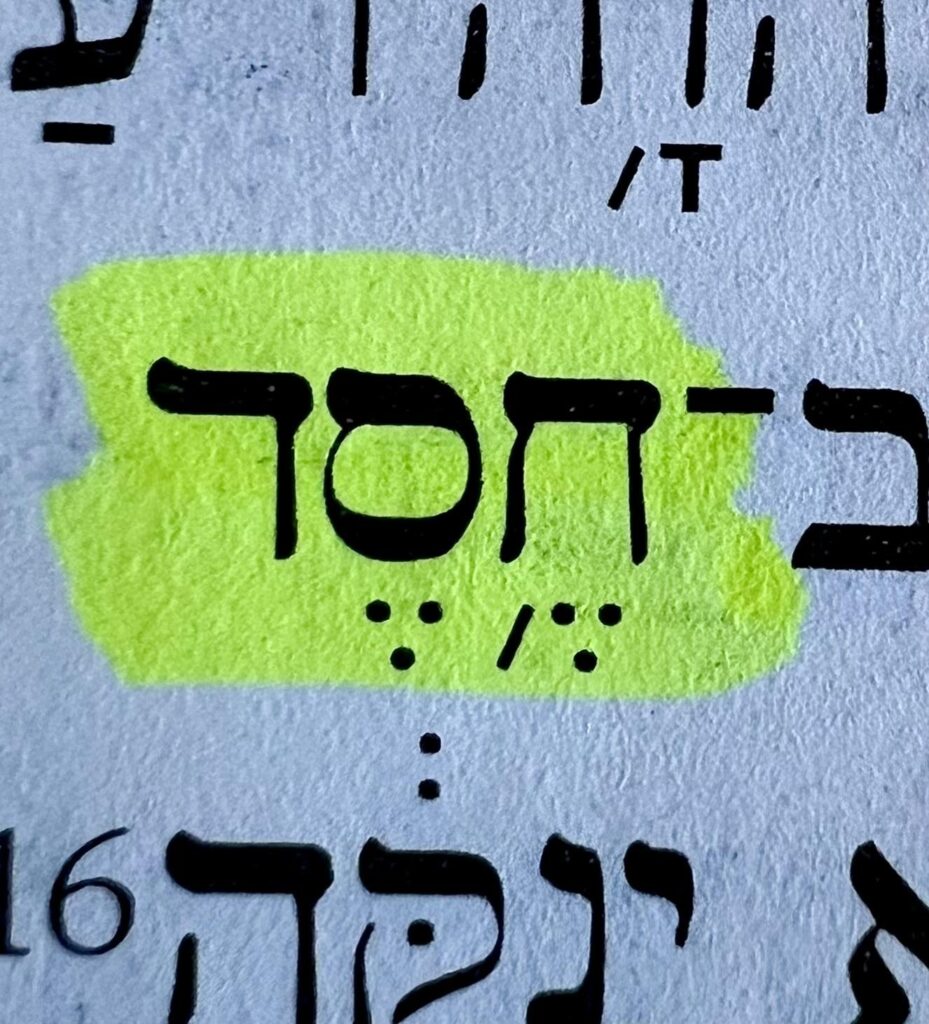
God’s #1 self-proclaimed characteristic is summed up in the biblical word, chesed.
Chesed:
- Benevolence
- Charity
- Kindness
- Compassion
- Steadfast love
- Covenantal faithfulness
- God’s GRACE all throughout the Hebrew Bible
- Loving-kindness
- Richness in faithful love
- Abundant in goodness
- Abounding in loyal love
- So much love, so deeply true—loyal love
And that is the beginning of many English words to encompass this one perfect, godly characteristic.
Traditional clothing for this holiday is white.
The shofar is blown at sunset to end the fast.
Traditional food to break the fast? Cheeses… white again?
Isaiah 1:18
“Come now, let us settle the matter,” says the Lord.
“Though your sins are like scarlet, they shall be as white as snow;
though they are red as crimson, they shall be like wool.”
White often biblically symbolizes the people of God’s righteousness.
Rev 7:14 And he said, “These are they who have come out of the great tribulation; they have washed their robes and made them white in the blood of the Lamb.
What crazy laundry can one do, washing clothes in blood, and coming out in pristine, white, spotless, & like new?
In the 1st century, Jesus arrived as God in the flesh, to be the final sacrifice for all who believe. The apostle Paul explained the price for sin to the Romans in
Romans 6:23 For the wages of sin is death, but the gift of God is eternal life in Christ Jesus our Lord.
Jesus’ death versus the Old Testament lamb atonement:
Equivalent to: Spot treating on a regular basis versus a complete cleansing & change of status.
Jesus completely cleanses us and changes our status to “not guilty!”
Through Jesus, “God did for us what we could not do for ourselves. (M&D 76)
This was prophesied in:
Isaiah 53:4-6
4 Surely he took up our pain
and bore our suffering,
yet we considered him punished by God,
stricken by him, and afflicted.
5 But he was pierced for our transgressions,
he was crushed for our iniquities;
the punishment that brought us peace was on him,
and by his wounds we are healed.
6 We all, like sheep, have gone astray,
each of us has turned to our own way;
and the Lord has laid on him
the iniquity of us all.
Future fulfillment of the Messiah.
One theological fulfillment is the Messiah’s future work with Israel. I truly believe God is not done with Israel yet.
There are scriptures that support this, yet they can be confusing.
One pertains to corporate repentance.
Authors Howard and Rosenthal outline this in their Feasts of the LORD book.
Zechariah 12:10
Mourning for the One They Pierced
10 “And I will pour out on the house of David and the inhabitants of Jerusalem a spirit[a] of grace and supplication. They will look on me, the one they have pierced, and they will mourn for him as one mourns for an only child, and grieve bitterly for him as one grieves for a firstborn son.
Scripture rarely preached on in amillenial churches is:
Romans 11:25-32
All Israel Will Be Saved
25 I do not want you to be ignorant of this mystery, brothers and sisters, so that you may not be conceited: Israel has experienced a hardening in part until the full number of the Gentiles has come in, 26 and in this way all Israel will be saved. As it is written:
“The deliverer will come from Zion;
he will turn godlessness away from Jacob.
27 And this is my covenant with them
when I take away their sins.”[g] Isaiah 59:20,21; 27:9, Jer. 31:33,34
28 As far as the gospel is concerned, they are enemies for your sake; but as far as election is concerned, they are loved on account of the patriarchs, 29 for God’s gifts and his call are irrevocable. 30 Just as you who were at one time disobedient to God have now received mercy as a result of their disobedience, 31 so they too have now become disobedient in order that they too may now receive mercy as a result of God’s mercy to you. 32 For God has bound everyone over to disobedience so that he may have mercy on them all.
What does this mean? Does Israel get a free pass? Are the Jewish people in regardless?
Or do those come to faith at the moment that the full number of gentiles has come in?
We know that Jesus proclaimed that at His arrival that He was the gateway to God, the substitutionary sacrifice.
John 14:6 Jesus answered, “I am the way and the truth and the life. No one comes to the Father except through me.
These authors include many more references, beginning with the book of Daniel.
There are LOTS of prophecy references.
If you are needing some extensive quiet time and an academic activity, it would be interesting to compile all of these prophecies in one document and see how they read chronologically or sequentially.
I am certain God will bless you.
But, this repentance is not just Israel’s repentance, but all people’s call to repentance.
God’s MERCY provided us a substitute.
First the temporary sacrificial system that needed to be repeated annually.
NOW Jesus, died, once FOR ALL.
He completely removed rather than annually covered over the people’s sin.
God’s sacrificial system in the Mosaic Covenant was temporary until the fullness of time. (Heb 7:19, Heb 10:1, Heb 8:7)
Atonement … at-one-ment … Reconciliation with God.
Jesus did it all.
The sin question is settled forever! (FOL pg 132)
1 John 5:13 I write these things to you who believe in the name of the Son of God so that you may know that you have eternal life.
And with that, our names are inscribed in the Book of Life, for sure.
Take a moment and reflect why your name is inscribed in the Book of Life.
It’s a simple, passive verb: receive. Or accept. The gift of eternal life through the death and resurrection of Jesus the Messiah.
Forgiveness isn’t in works, or mitzvot.
We do works or mitzvot in our gratitude to Jesus and what He has done for us.
But forgiveness comes only through accepting the gift offered from the Lamb of God.
One final thought regarding this holiday and the final judgment at End Times.
Reading Revelation 20, after the Messiah returns, unbelievers will face a final judgment.
Revelation 20:11-15
11 Then I saw a great white throne and him who was seated on it. The earth and the heavens fled from his presence, and there was no place for them. 12 And I saw the dead, great and small, standing before the throne, and books were opened. Another book was opened, which is the book of life. The dead were judged according to what they had done as recorded in the books. 13 The sea gave up the dead that were in it, and death and Hades gave up the dead that were in them, and each person was judged according to what they had done. 14 Then death and Hades were thrown into the lake of fire. The lake of fire is the second death. 15 Anyone whose name was not found written in the book of life was thrown into the lake of fire.
Friends, do not wait until the Book of Life is closed.
You have a free gift.
You can accept it rather than one day experience eternal separation from God.
And let the one who hears say, “Come!” Let the one who is thirsty come; and let the one who wishes take the free gift of the water of life.
AMEN! Come Lord Jesus.
**Heather!
©2025 Heather M R Olsen, Illumination: Hebrew Insights. All rights reserved.

